Number Puzzles: Complete Guide + Brain Benefits Research

Number puzzles strengthen your brain through structured problem-solving, arithmetic logic, and deductive reasoning. From Sumplete's fast mental math to Sudoku's constraint logic, the right number puzzles can improve working memory, processing speed, and cognitive flexibility — backed by scientific research.
But which number puzzles are most effective? And what does the research actually say?
This guide covers everything you need to know about number puzzles — the best games to play (Sumplete, Sudoku, Kakuro, KenKen, Nonograms), which brain systems they strengthen, and what recent studies reveal about their cognitive benefits.
In this guide:
- Best number puzzles by brain benefit (working memory, processing speed, mental math)
- Science-backed research on cognitive improvements
- How to maximize benefits (daily rituals, puzzle variation)
- What the research says about older adults and cognitive decline
Let's start with why number puzzles are so effective for adult brain health.
Why Are Number Puzzles So Effective for the Adult Brain?
Number puzzles effectively improve brain health in adults for three main reasons:
- The Role of Structured Problem-Solving
Number puzzles serve as a vehicle for structured problem-solving. Players must operate within a game’s rules to identify valid solutions. According to a recent study released in September 2025, structured problem-solving helps facilitate cognitive engagement, and it is also critical in supporting retrieval practice, spacing, and interleaving. These skills all promote long-term knowledge retention and self-directed learning, which is ultimately why players will engage in multiple gaming sessions as they attempt to improve their scores.
- The Cognitive Load of Arithmetic-Based Logic
An individual’s working memory is what allows them to solve mathematical operations. Number-puzzle games with arithmetic-based logic help players improve their working memories. As players solve a series of calculations within a puzzle, the cognitive load required to play the game is what simultaneously trains the working memory. In simple terms, the game’s mathematical aspects help players improve their mathematical ability.
- The Power of Deduction
Guessing games can be fun, but they are nowhere near as impactful on the mind as puzzles that require deductive reasoning to solve. Deduction’s benefits go far beyond the confines of puzzles — it’s a skill that, when honed, can help improve decision-making in day-to-day life.
What Are the Core Brain Systems that Number Puzzles Strengthen?
Working Memory
There are several ways players can improve their working memory when playing number puzzle games. Games like Sumplete and Sudoku challenge players to hold multiple line constraints, numbers, or move sequences in mind throughout each session. Retaining this information while navigating the board helps develop better memory skills.
Processing Speed
Many number puzzles are timed or feature scoring systems that award higher point totals for faster solves. Players are often tasked with quickly scanning values such as logical pathways and contradictions, which can help improve the speed at which they process information.
Mental Math & Numerical Fluency
If you need a quick and enjoyable way to test your math skills, number puzzles feature the likes of addition, elimination, target-matching, and more.
Pattern Recognition
Detecting patterns is a critical life skill, and number puzzle games are great for training that mental muscle. Repeated puzzle structures found in games like Sumplete (pairs and triples) and Nonograms (shaded squares and empty cells) can strengthen predictive mapping.
Cognitive Flexibility
Multitasking can be difficult to do as it requires substantial cognitive flexibility. Number puzzle games will often require players to switch between rows and columns, re-evaluate their selections against potential contradictions, and keep an eye on the clock (if applicable).
Science Snapshot
Don’t take our word for it — listen to the experts!
A study conducted by the University of Wisconsin School of Medicine and Public Health linked puzzle engagement to higher cognitive scores and greater gray matter volumes in areas vulnerable to Alzheimer's disease pathology in a cohort of at-risk, middle-aged adults. The same study also assessed the importance of game frequency, noting that adults in the aforementioned cohort who frequently played number puzzle games experienced enhanced performance on cognitive measures of mental speed and flexibility, verbal learning, and immediate memory.
Although it has not been confirmed, game playing has also been cited as a potential factor in the slowdown of cognitive decline. Cognitive activities such as solving number puzzles may build cognitive reserve, enabling individuals to maintain normal cognition longer.
Puzzle variation plays a key role as well. When players engage with different puzzles, they are tasked with different objectives and must comply with unique rule sets. Each new game allows them to practice different cognitive skills. According to research conducted by Vera Tobin, an Associate Professor at Case Western Reserve’s Department of Cognitive Science, these skills can be transferred to other activities requiring the same abilities.
Ultimately, this is one of the best benefits of playing number puzzle games — players can take what they’ve learned from puzzles like Sumplete or Sudoku and use those lessons to enhance their performance in other cognitively challenging situations.
Number Puzzles by Brain Benefit
Sumplete — Arithmetic Elimination
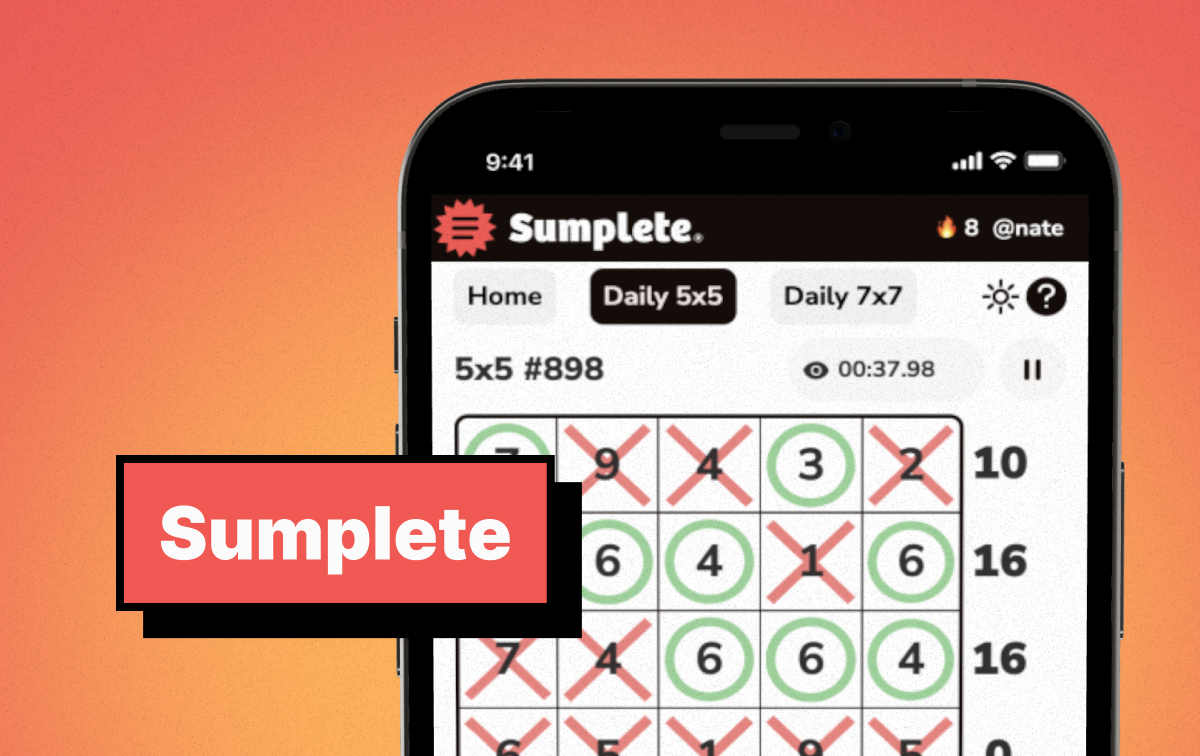
- Fast mental math: Players add sums quickly to match sum clues.
- Intersecting-line reasoning: Selections in one direction must not invalidate intersecting lines.
- Deductive filtering: Players must eliminate cells from consideration using deductive reasoning.
Mini Sudoku — Constraint Logic
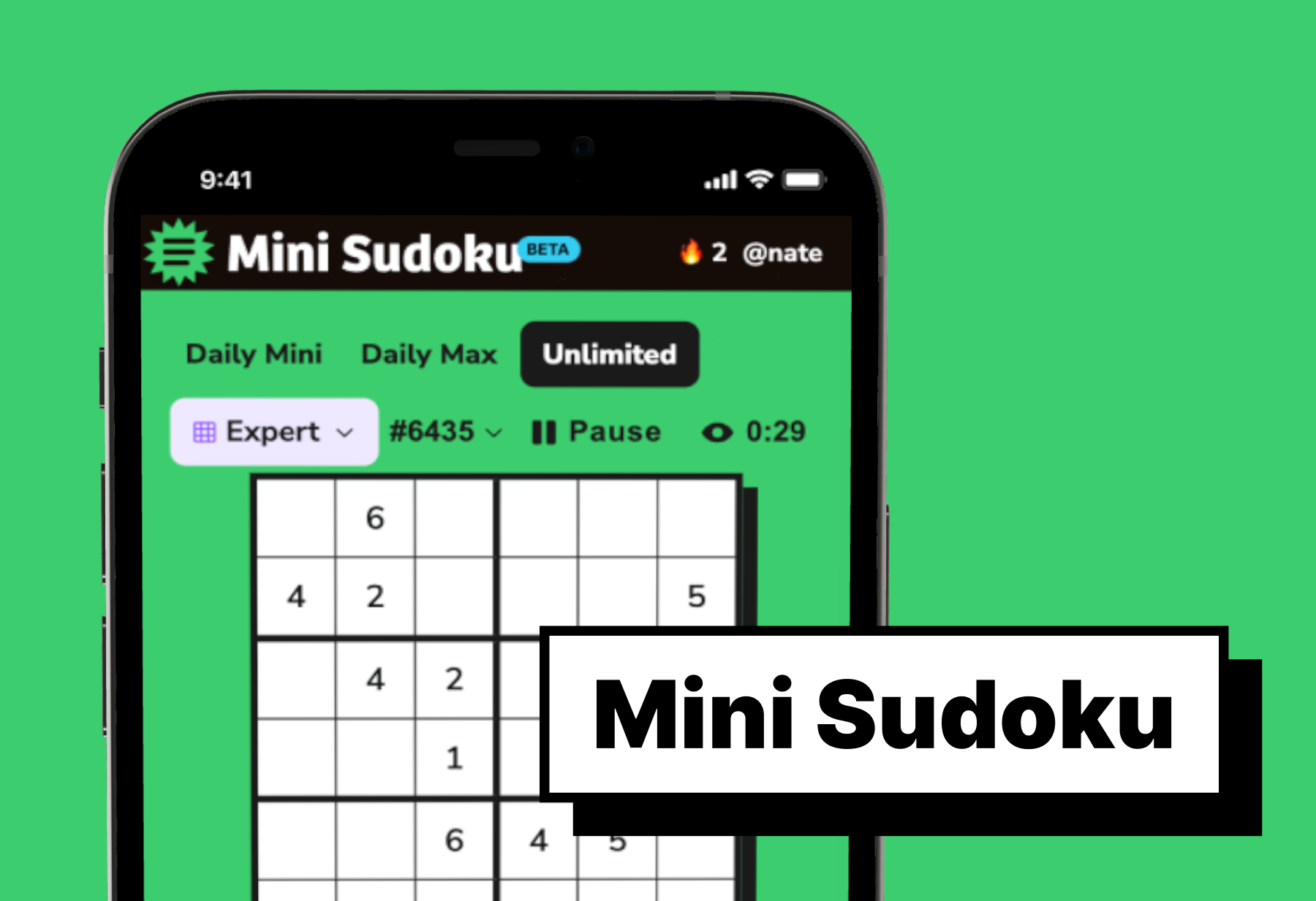
- Spatial working memory: Players must keep track of their progress across rows, columns, and 2×3 blocks to prevent contradictions.
- Pattern extraction: Picking up on numerical patterns (1-6) and preset value placements is critical to a player's success.
- Sequential reasoning: Because repeated values are prohibited, a player's ability to identify complete, incomplete, and invalid sequences is an essential component of the game.
- Faster cognitive training: The 6×6 grid provides the same constraint logic benefits as 9×9 Sudoku but in 5-10 minutes instead of 15-30, making it ideal for daily play.
Kakuro — Caged Sums
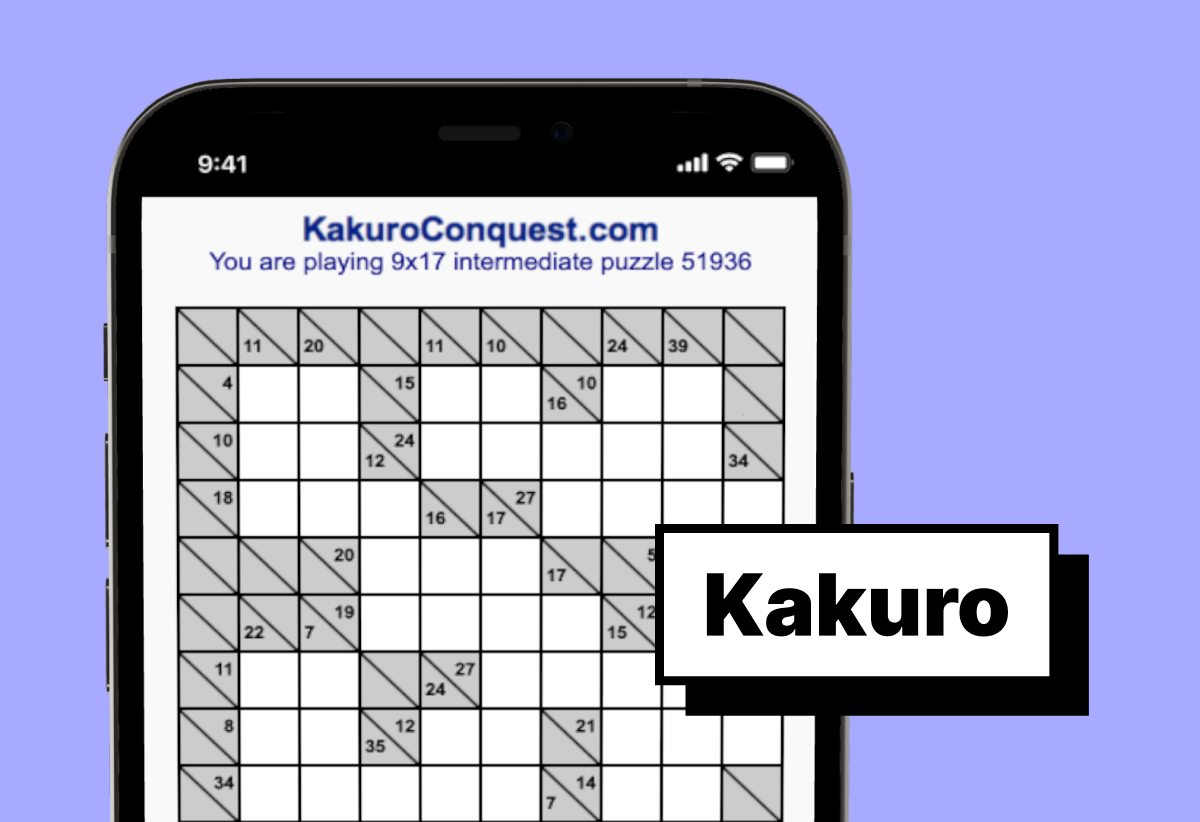
Kakuro fills a crossword-style grid with digits 1–9, where every row and column must sum to its clue number without repeating a digit. Learn how to play Kakuro →
- Multi-step arithmetic planning: Solving for the caged sums is only half of the battle in Kakuro. Players must ensure they are meeting the line clue criteria in one direction while avoiding contradictions in the other.
- Combination evaluation: Players should carefully select lines with the least amount of possible combinations to increase their chances of accurate inputs.
KenKen — Operation Logic
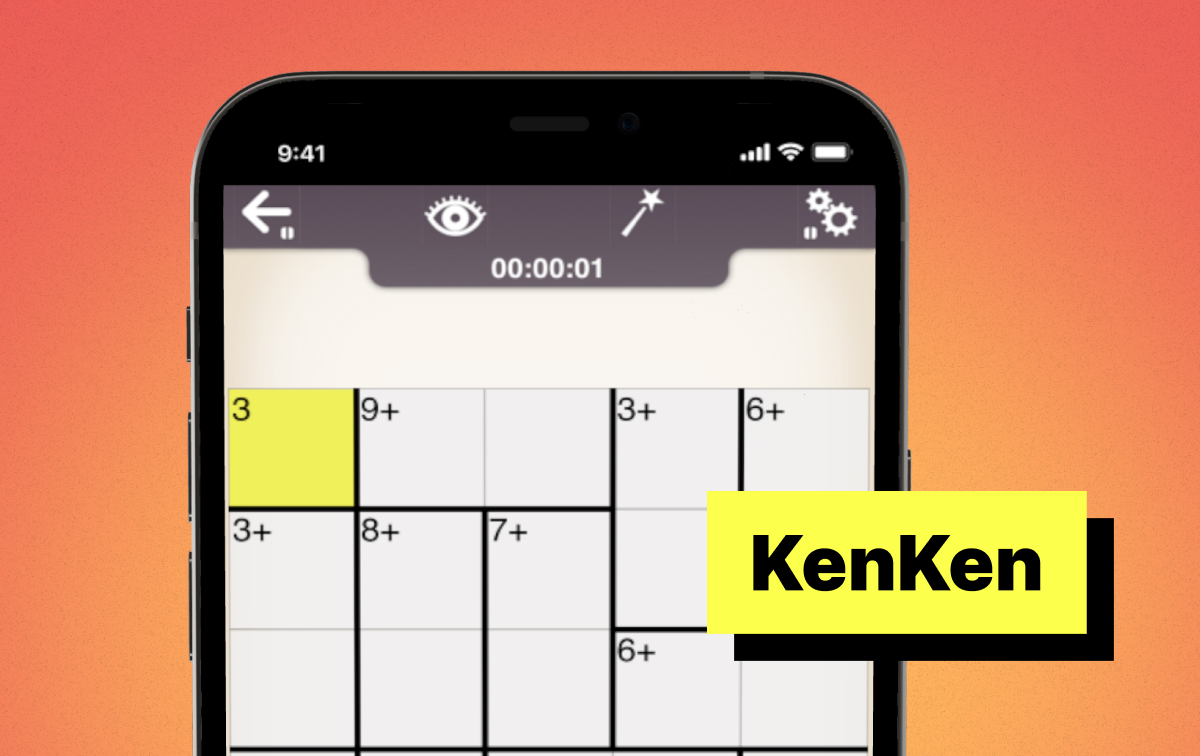
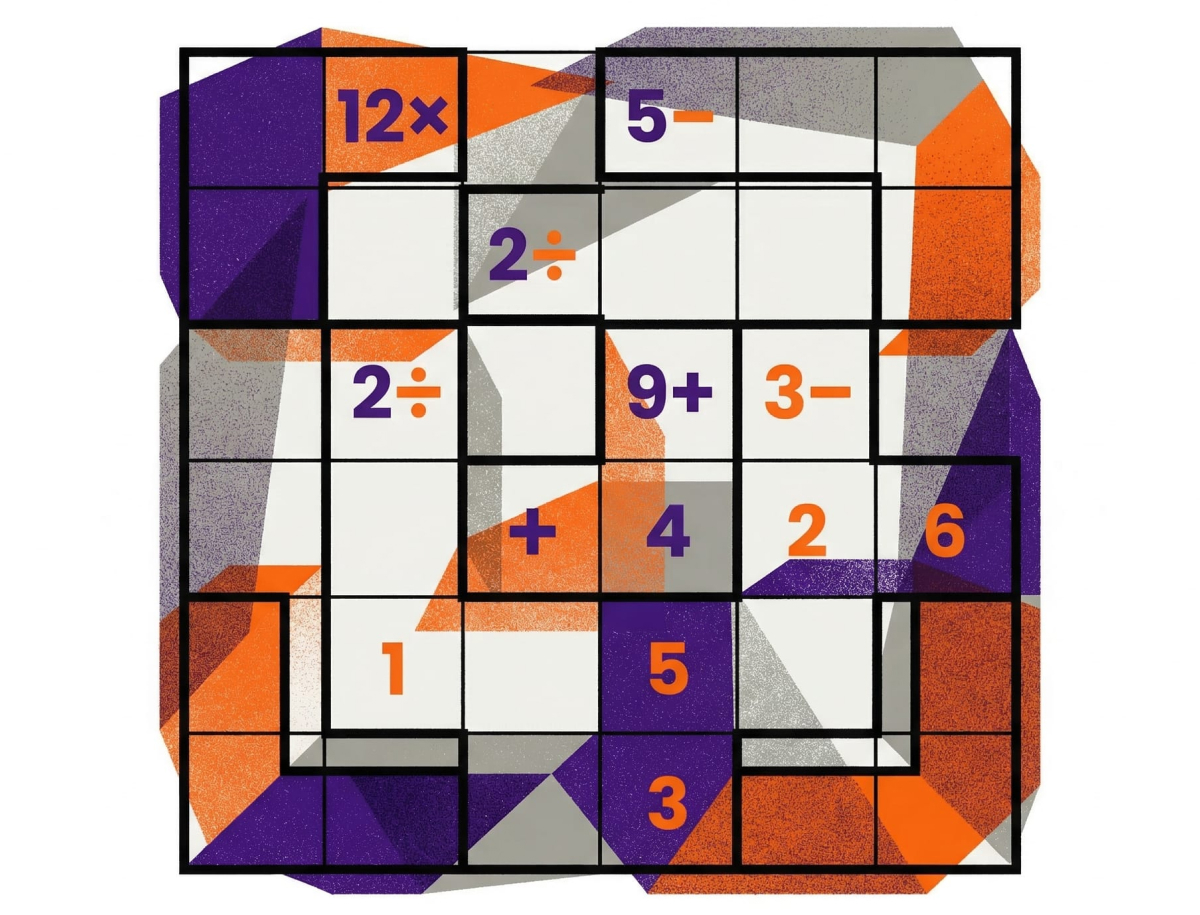
- Algebra-adjacent reasoning: Value inputs are limited to numbers that meet the mathematical criteria of each cage.
- Multi-constraint planning: In addition to solving for each cage using the designated operation, players must also ensure there are no repeats across any rows or columns on the board.
Nonograms — Spatial Logic
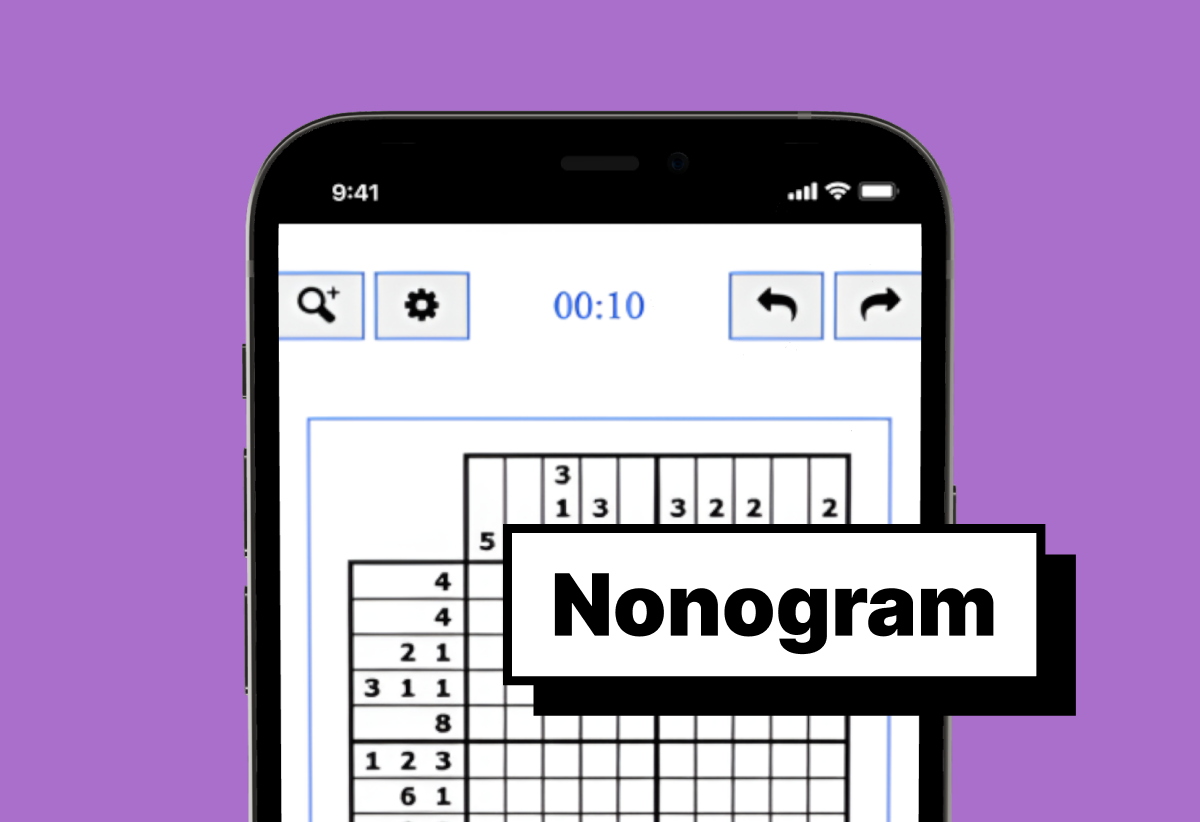
- Visual-spatial deduction: Determining which spaces cannot function as shaded squares or empty cells via deductive reasoning is a core element of Nonogram games.
- Cross-line scanning: Identifying line clues that yield limited or single solution answers is a key strategy in solving Nonogram puzzles.
Daily Rituals vs. Long Sessions
Why 3 to 10 Minutes is Enough
While longer sessions are always encouraged, 3 to 10 minutes of daily concentrated playing time is all that is needed for the brain to gain the benefits of a number puzzle game.
Habit Loops & Cognitive Consistency
Developing cognitive consistency requires cyclical reinforcement, which is why daily number puzzles are so effective. Number puzzles help reinforce positive habit loops, in turn improving critical thinking.
Morning Puzzles vs. Evening Puzzles
Many players kick off their days with morning puzzles, but that doesn’t mean there aren’t benefits to playing in the evening. Some players have reported enjoying evening play sessions because they help prevent them from staring at their phone or computer screen late at night.
5 Tips for Getting the Most Brain Benefits from Number Puzzles
- Start with one daily puzzle at a time so you can focus on improving your scores. Take the Sumplete 5×5 Daily Challenge, for example.
- Gradually increase your board size or difficulty level.
- Once you’ve gotten the hang of one game at a higher difficulty level, change up your puzzle selection weekly.
- Avoid guessing at all costs; instead, try to force yourself to use logical deduction.
- Track winning streaks to compete with friends and instill positive mental habits.
Are Number Puzzles Good for Older Adults?
Yes, number puzzles are great mental training tools for older adults. They can improve processing speed and memory through gentle, stress-free cognitive engagement. Arithmetic puzzles are also superb for neural activation. In fact, they actually outperform their word-based counterparts in this regard. This is due to the fact that number puzzles appear to activate more areas of the prefrontal cortex.
When Number Puzzles Don’t Help
If you find that a number puzzle isn’t very challenging or engaging, it likely won’t require the cognitive load necessary to achieve the brain training benefits you are seeking. Grinding game sessions without variation, either in difficulty or puzzle type, can lead to the plateau effect. The same can be said for solving puzzles with hints or cheats enabled — these elements minimize the impact the game is supposed to have on your cognition.
Best Number Puzzles for Daily Play
For Quick, Daily Hits of Number Puzzle Logic:
- Sumplete Daily 5×5
- Sudoku Minis
For Cognitive Workouts Requiring Deep Thinking:
- Kakuro
- 7×7–9×9 Sumplete
- Killer Sudoku
For Balanced Logic and Math:
- KenKen
- Futoshiki
FAQ
Do number puzzles actually improve IQ?
No, number puzzles do not directly improve IQ. However, they can enhance a player’s cognitive skills, which support problem-solving. Improved problem-solving ability can lead to a player performing better on an IQ test.
How often should I play?
It is recommended that people play number puzzle games for 3–10 minutes daily to achieve the aforementioned brain training benefits.
Are arithmetic puzzles better than visual puzzles?
It isn’t a matter of one puzzle being better than the other: each puzzle type trains different areas of the brain. We recommend trying a mix of both to maximize the benefits of each!
Start Playing Number Puzzles Today
Number puzzles offer proven cognitive benefits — improved working memory, faster processing speed, and stronger deductive reasoning — all backed by scientific research. The key is daily play (3-10 minutes) and puzzle variation.
If you're ready to start, we recommend Sumplete as your primary number puzzle — it's fast (1-6 minutes), scales difficulty (3×3 to 7×7), and strengthens mental math in a way that transfers to everyday arithmetic.
Play Sumplete now → (Start with the 5×5 Daily Challenge)
For variety, rotate in Sudoku (constraint logic), Kakuro (caged sums), or KenKen (operation logic) a few times per week.
Bottom line: 3-10 minutes daily, mix puzzle types, track your streak. That's the research-backed routine.
 Mini Crossword
 Midi Crossword
 Diffle
 Killer Sudoku
 Numberle