Daily Brain Puzzle Routine: A 10-Minute Plan for Better Focus
Brain puzzles strengthen memory, sharpen focus, and improve cognitive flexibility — and you only need 10 minutes a day to see real benefits. From number puzzles like Sumplete to visual challenges like Nonograms, the right mix of daily brain puzzles can act as cross-training for your mind.
But not all brain puzzles are equally effective. And playing the same type every day leads to plateauing.
This guide covers everything you need to know about brain puzzles — which types produce the strongest cognitive gains, how to build an effective 10-minute daily routine, and the best games to play for mental math, spatial logic, and deductive reasoning.
In this guide:
- Best brain puzzles for different cognitive goals
- The science behind daily puzzle benefits (Cognitive Load Theory, neuroplasticity)
- A 10-minute daily routine to maximize brain health
- Weekly rotation plan to prevent plateauing
Let's start with how daily puzzles improve cognition.
How Does a Daily Puzzle Routine Improve Cognition?
Daily puzzle routines are effective for a few reasons:
Small, Consistent Cognitive Load
While elongated playing sessions can be a lot of fun, the brain only requires short play sessions to achieve cognitive development. Players can successfully train their brains simply by introducing small cognitive loads through short sessions on a consistent basis.
Cross-Training for the Mind
Different puzzle types stress different cognitive systems. Spatial puzzles strengthen visual working memory. Arithmetic puzzles sharpen mental math and precision. Logic-grid games improve constraint tracking and error detection. When combined into a daily routine, these puzzles act as cross-training for the mind—reinforcing skills that transfer beyond gameplay.
Habit Loops that Reinforce Focus and Memory
Many brain puzzles instill positive mental habits. Players often find themselves deploying different strategies, such as deductive reasoning and intersecting logic, to solve these puzzles, and these strategies fortify their concentration and memory abilities.
The Ideal 10-Minute Daily Brain Puzzle Sequence
Check out this skimmable checklist for the perfect brain puzzle routine. Come back to this list next time you want to adjust your repeatable daily ritual with new games!
1. Warm-Up (1–2 minutes)
Start your play session with something light and quick to get the brain moving. We recommend playing one of the following puzzles:
- The Sumplete 3×3 board or the 5×5 Daily Challenge.
- The Crosswordle 7x7 Daily Challenge
- A micro logic puzzle, such as Wordle or Mathler.
Core Purpose: Activate your working memory and pattern recognition with a quick-hitting logic game to kick off your play session.
2. Primary Puzzle (4–6 minutes)
Choose one of the following titles based on your goal:
- Improving Mental Math → Sumplete 5×5 or 7×7 Daily Challenge
- Testing Spatial Logic → Nonogram (begin with the small board if it’s your first attempt)
- Working with Constraint Reasoning → Sudoku
- Building Deduction Skills → Logic grid puzzle
Purpose: Engage with the main cognitive load of the session and finish an entire game in the 4–6-minute timeframe.
3. Cool-Down (1–2 minutes)
Time to pull things back a bit before concluding the play session. Cap things off by:
- Quick Puzzle Recap: Review your run and assess how you can improve for tomorrow’s session.
- Log Puzzle Streak: Keep track of your consecutive days played, wins, and scores.
- Optional: Play a Second Warm-Up-Level Puzzle (if time allows).
Purpose: Reinforce the skills that the brain just worked on and mentally track ways to improve future runs.
Why is 10 Minutes Enough?
A consistent 10-minute play session is a low-friction routine that enables players to process critical information and form habits.
Cognitive Load Principles
One of the core principles of Cognitive Load Theory states that our working memory has limited capacity. An overwhelming amount of information might disrupt the transfer process from the working memory to the long-term memory, meaning that the information may be lost altogether. 10 minutes of playtime is substantial enough for a player to retain the information from the session without overwhelming the working memory.
Habit Formation
Because players can retain the information from the recap portion of the session in addition to their time spent playing, they have an ideal opportunity to form and reinforce positive mental habits.
Low Friction → High Consistency
Friction represents the difficulty a person encounters when attempting a task. In this case, a short, 10-minute session would be considered a low-friction activity. It’s a positive habit that someone can easily establish and, more importantly, consistently execute.
Best Brain Puzzles for Daily Play
Before diving into the 10-minute routine framework, here are the top brain puzzles we recommend for daily cognitive training:
For Mental Math (Number Puzzles)
Sumplete — Quick Addition/Subtraction Challenges
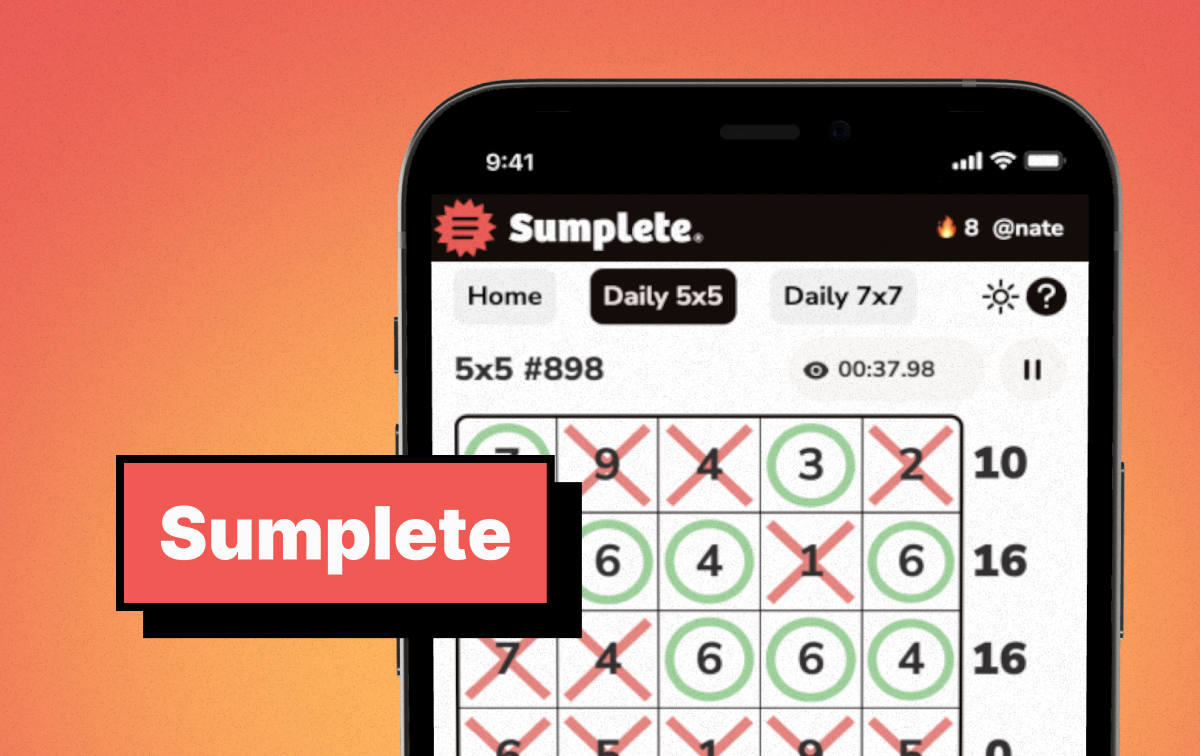
Sumplete offers fast mental math practice on grids ranging from 3×3 (beginner) to 7×7 (advanced). Each puzzle takes 1-6 minutes, depending on grid size, making it perfect for daily warm-ups or primary puzzle sessions.
Why it works:
- ✅ Fast solve times (1-6 minutes depending on difficulty)
- ✅ Daily challenge mode keeps you coming back
- ✅ Scales difficulty (start with 3×3, progress to 7×7)
- ✅ Strengthens arithmetic speed and accuracy
- ✅ Trains your brain to spot number patterns quickly
Best for: Daily mental math practice, improving calculation speed, and building number sense. Interested in learning? Learn how to play Sumplete.
Kakuro — Number Crossword Puzzles
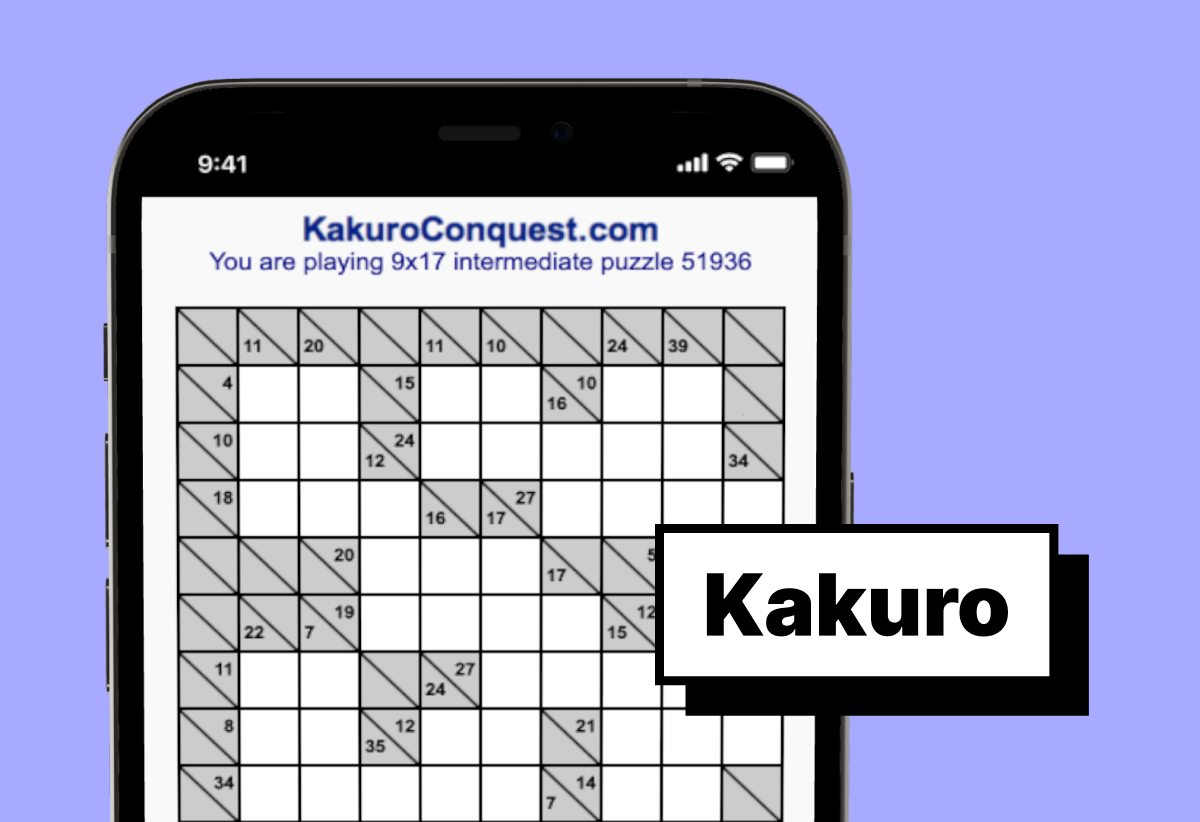
Kakuro combines arithmetic with spatial logic. Like a crossword but with numbers, you fill cells to match sum clues while avoiding repeats in each "word."
Why it works:
- ✅ Combines arithmetic with spatial planning
- ✅ Requires thinking ahead (not just quick calculation)
- ✅ Daily puzzle available on most Kakuro sites
- ✅ More complex than Sumplete (good for variety)
Best for: Players who want mental math combined with constraint reasoning.
For Spatial Logic (Visual Puzzles)
Nonograms — Picture Logic Puzzles
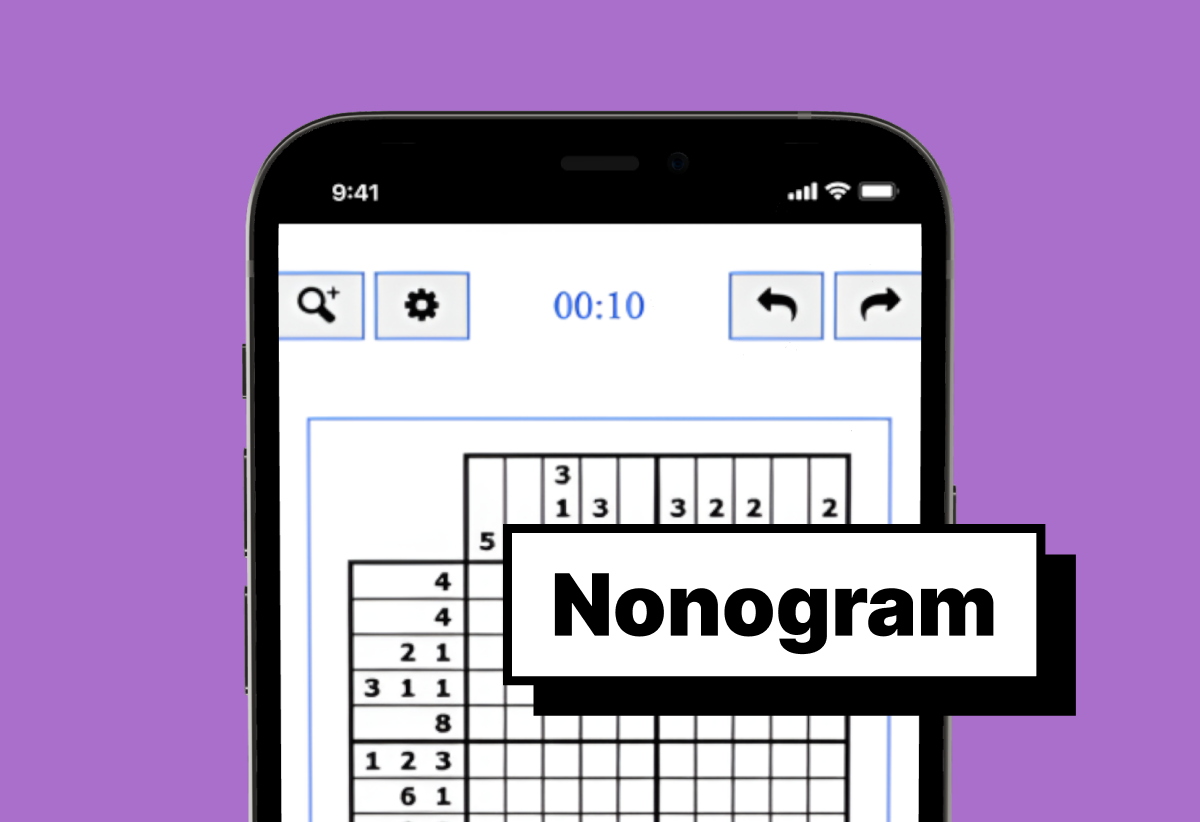
Nonograms (also called Picross) challenge you to shade cells based on number clues to reveal hidden pictures. Best puzzle type for strengthening visual working memory.
Why it works:
- ✅ Strengthens spatial reasoning and pattern recognition
- ✅ Requires tracking multiple clues simultaneously
- ✅ Satisfying "aha!" moments when the image emerges
- ✅ Scales from simple 5×5 grids to complex 25×25
Best for: Visual thinkers who enjoy seeing patterns emerge from abstract clues. Learn what is a nonogram.
Hitori — Number Shading with Connectivity Rules
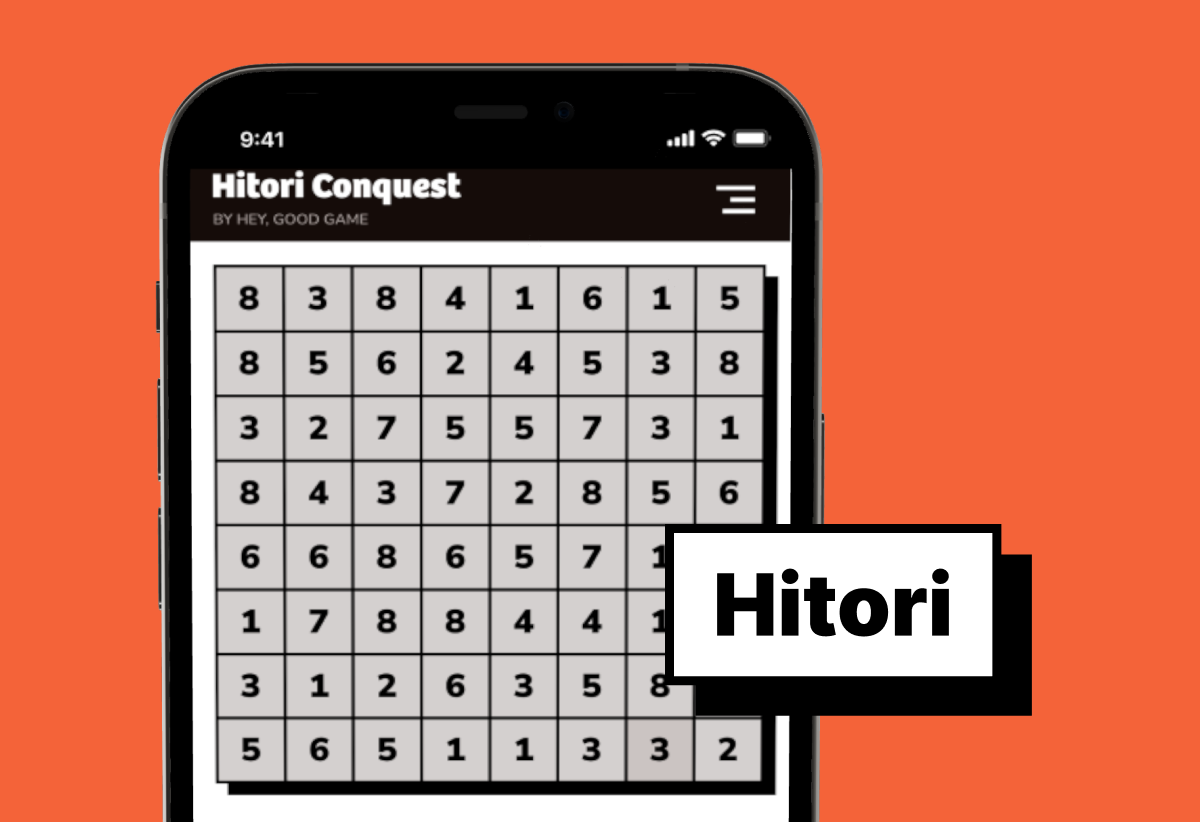
Hitori adds an extra layer of complexity to spatial puzzles: shade numbers while maintaining a connected grid of unshaded cells.
Why it works:
- ✅ Combines pattern recognition with global constraint solving
- ✅ Requires board-wide awareness (connectivity rule)
- ✅ Trains your brain to think about consequences of each move
Best for: Players who want more challenging spatial logic than Nonograms.
For Deductive Reasoning (Logic Puzzles)
Mini Sudoku — Beginner-Friendly Number Logic
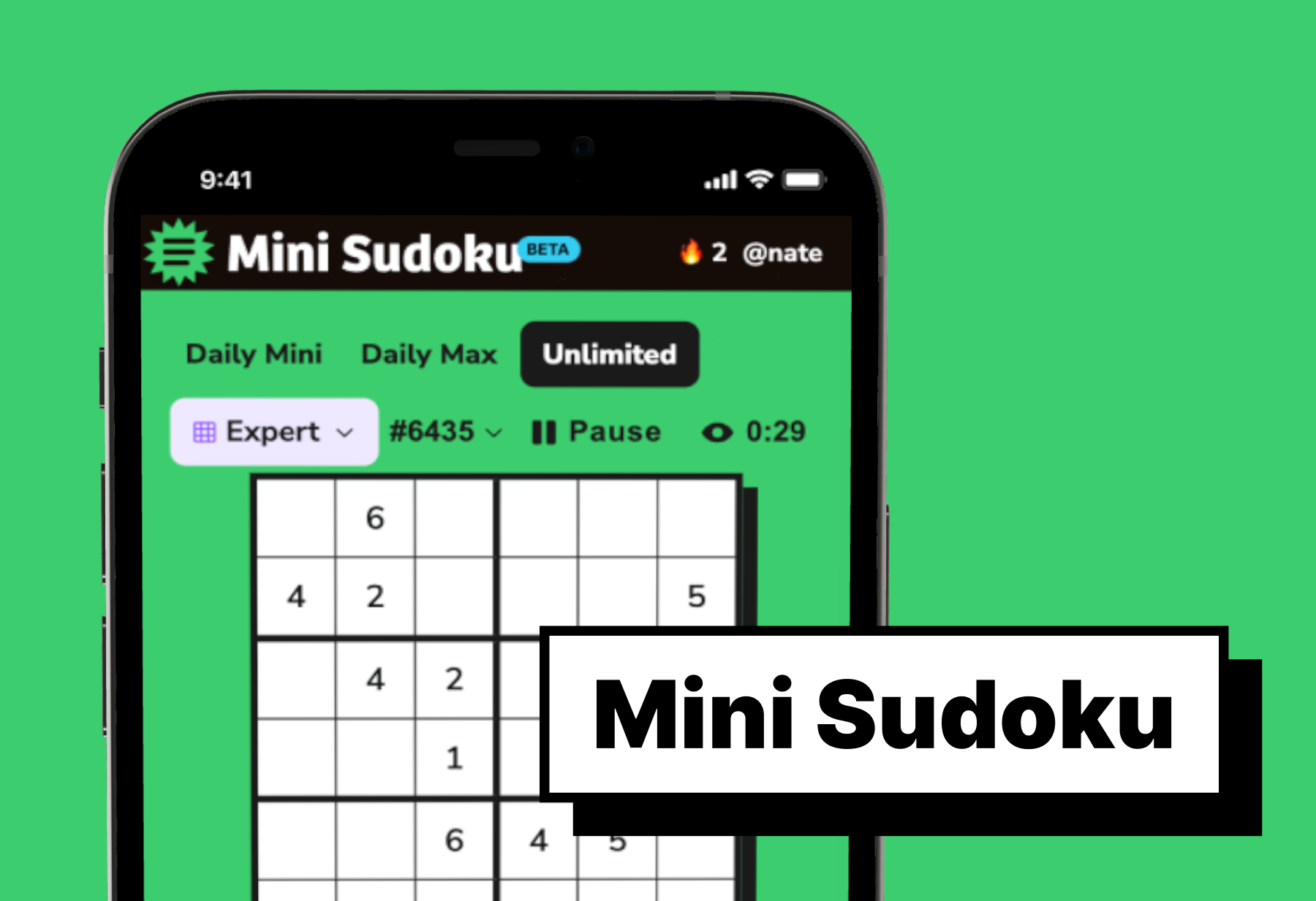
Mini Sudoku is a 6×6 variant of Sudoku (numbers 1-6 instead of 1-9) that offers the same cognitive benefits as standard Sudoku but in a faster, more accessible format. Perfect for daily 10-minute routines.
Why it works:
- ✅ Same cognitive benefits as 9×9 Sudoku (constraint tracking, working memory)
- ✅ Faster solve times (5-10 minutes vs 15-30 for standard)
- ✅ Less intimidating for beginners (smaller grid, fewer numbers to track)
- ✅ Daily challenge mode available
- ✅ Fits perfectly into a 10-minute brain puzzle routine
Best for: Players who want Sudoku's proven benefits without the time commitment. Ideal for daily warm-ups or primary puzzle sessions.
Note: If you want more difficulty, standard 9×9 Sudoku offers the same benefits with longer solve times (15-30 minutes). Mini Sudoku is the sweet spot for daily practice.
Logic Grids — Pure Deduction Challenges
Logic Grids present a series of clues linking categories together. You must deduce which items connect by eliminating impossible combinations.
Why it works:
- ✅ Strengthens logical inference skills
- ✅ No math or spatial logic required (pure deduction)
- ✅ Transfers directly to real-world problem-solving
- ✅ Forces you to track multiple constraints simultaneously
Best for: Players who want to sharpen pure logical reasoning without numbers or visuals.
Now let's look at how to combine these brain puzzles into an effective daily routine.
How to Choose a Game for Your Routine
Your game of choice should be determined by the cognitive training you wish to achieve through your routine.
For Mental Math
- Sumplete: Helps players improve their mental math skills through quick addition and subtraction.
- Kakuro: Addition and subtraction are the core focus of this game as well, with a unique twist of a non-square grid.
For Memory + Pattern Recognition
- Sudoku: Tasks players with adding values 1–9 to the board in three different groupings, all while avoiding repeats.
- Futoshiki: Players must avoid repeating values in two directions on a square grid while ensuring values are placed in accordance with the “greater than” and “less than” symbols scattered across the board.
For Spatial Logic
- Nonograms: Shading in squares is the name of the game in Nonograms, but players must leverage spatial logic to identify which empty cells on the grid separate sets of consecutive shaded squares, known as blocks.
- Hitori: Another shading game, Hitori challenges players to shade in preset values on a square grid so that no unshaded numbers repeat in a row or column, no two shaded cells appear next to one another (horizontally or vertically), and so that the remaining non-shaded cells are connected in a single group.
For Deductive Reasoning
- Logic Grids: Each logic grid contains a series of vertical and horizontal categories, with an equal number of options in each category. Players must deduce which options are linked together by interpreting a series of clues.
- Slitherlink: Players draw lines between a dotted grid to form a single loop without crossings or branches, all while ensuring the numbers on the board are surrounded by an equal number of lines. Deduction is used to eliminate loop routes based on the number logic present.
If you want a more in-depth look at how playing Sumplete and other puzzles is beneficial for you, read our number puzzles brain benefits guide.
Weekly Puzzle Rotation Plan
Here’s a quick plan to help you keep your daily puzzle routine fresh and avoid a neurological plateau:
Sample Weekly Template
- Mon: Math logic puzzle (Ex: Sumplete)
- Tue: Visual logic puzzle (Ex: Nonograms)
- Wed: Constraint logic puzzle (Ex: Sudoku)
- Thu: Logic grid puzzle
- Fri: Game of player’s choice at elevated difficulty (Ex: Sumplete 7×7)
- Weekend: Game of the player’s choice, along with a long-form puzzle.
6 Simple Tips for Maximum Brain Benefit
- Keep daily puzzles small, short, and to the point to avoid burnout.
- Switch puzzle types daily to engage different areas of the brain.
- Limit hints to enhance the daily challenge.
- Avoid guessing — use strategies like deduction, spatial logic, and mental math instead.
- Track your play and win streaks as you progress.
- Play at the same time each day to develop a consistent routine.
Why Does Daily Play vs. Sporadic Play Matter?
Anybody can solve a puzzle once in a while. Those who play daily have the most to gain.
Neuroplasticity and Repetition
Repetition helps drive neuroplasticity, in turn preventing a decline in one’s ability to perform a new skill. In the world of logic puzzles, repetition and consistent play are what allow players to reinforce positive mental habits and enhance their playing ability.
Routine as Cognitive Anchoring
When a routine is enjoyable, a person is far more likely to maintain it. On the surface, solving logic-based problems doesn’t seem very fun. In a puzzle format, however, boring logic problems transform into fun and competitive games. By playing one of these games, a player can anchor the positive cognitive tests they are running with their positive experience solving puzzles.
Consistency over Cognitive Overload
Again, overwhelming the brain with too much information can prevent players from retaining the positive habits and mental skills gained from playing these kinds of puzzles. Three short, daily sessions are far more beneficial than a single 30-minute session. Consistency is key.
FAQ
What are the best brain puzzles for daily play?
The best brain puzzles for daily cognitive training include Sumplete (mental math), Mini Sudoku (constraint reasoning), Nonograms (spatial logic), and Logic Grids (deductive reasoning). Mix puzzle types, like a Wordle-and-crossword hybrid, to engage different cognitive systems and prevent plateauing.
Do brain puzzles really improve memory and focus?
Yes! Research shows that daily brain puzzles improve working memory, pattern recognition, and cognitive flexibility. The key is consistency — 10 minutes daily beats 30-minute sporadic sessions. Different puzzle types (number, visual, logic) cross-train different cognitive systems.
Are brain puzzles better than brain training apps?
Brain puzzles like Sumplete, Mini Sudoku, and Nonograms offer similar cognitive benefits to paid brain training apps, but with clearer rules and more engaging gameplay. Many brain training apps use puzzle mechanics anyway — playing actual puzzles cuts out the middleman and is free.
Does time of day matter?
No, the time of day at which a player starts their routine won’t impact the cognitive benefits they receive. That said, morning sessions have been found to help players boost focus, while evening sessions have helped others wind down their brains after a long day.
How long does it take to see improvements?
It usually takes players 2–3 weeks to see cognitive improvements.
Should adults vary puzzle difficulty?
Yes, adults should vary their puzzle difficulty as mild mental challenges produce the strongest long-term gains. For more in-depth information, refer to our complete guide to logic puzzles for adults.
Start Your Daily Brain Puzzle Routine Today!
Brain puzzles offer proven cognitive benefits — better memory, sharper focus, and improved problem-solving — all in just 10 minutes a day. The key is consistency and variety.
If you're ready to start, we recommend Sumplete as your primary puzzle — it's fast (1-6 minutes), scales difficulty (3×3 to 7×7), and strengthens mental math in a way that transfers to everyday life.
Play Sumplete now → (Start with the 3×3 warm-up, then try the Daily Challenge)
For variety, rotate in Mini Sudoku (constraint reasoning), Nonograms (spatial logic), or Logic Grids (deductive reasoning) a few times per week.
Bottom line: 10 minutes daily, mix puzzle types with games like Sumplete, track your streak. That's the routine.
 Mini Crossword
 Midi Crossword
 Diffle
 Killer Sudoku
 Numberle